Everyday Life in the GDR
The German Democratic Republic (GDR), or Communist East Germany, ceased to exist at midnight on 3 October 1990. It was neither democratic, nor was it a republic. It was a dictatorship in which there were no free elections, no division of powers, and no freedom of movement. Millions of Germans lived in Communist East Germany for 40 years – so what was it like? How did the country function in which for 40 years a bread roll cost 5 pfennigs, but there were as good as no bananas? The country that built the highest TV tower in Germany, but did not provide enough housing to go around? That produced beautiful fairy-tale films, but forced critical artists into exile?
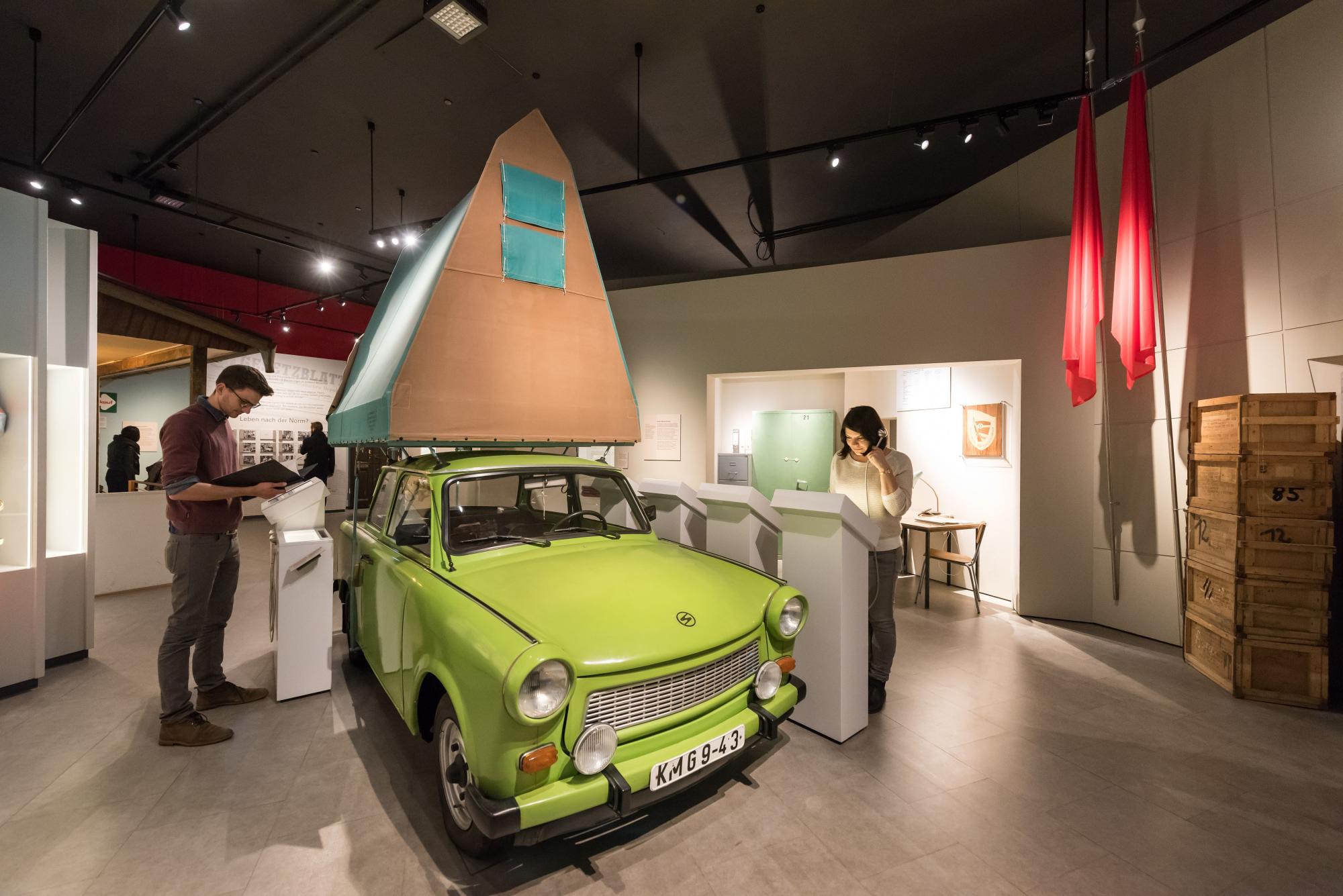
Our permanent exhibition on “Everyday Life in the GDR” shows what East Germans’ lives were like in the 1970s and 1980s – at work, in public and in private. It shows how the Communist regime shaped everyday life, how people coped with the lack of things and the borders, and how they created free spaces for themselves.
We present original objects in the individual themed rooms in the exhibition that then blend with everyday scenes. You can take a seat in a tavern, a living room or at a work bench, and find out more about leisure time and improvisation, housing construction and working life in Communist East Germany. Everyday objects are supported in the exhibition by historical documents, accounts by contemporary witnesses, and film material from the time, shedding light on everyday life in Communist East Germany from several different angles.
Tuesday-Friday
9 a.m.–6 p.m.
Saturday-Sunday
10 a.m.–6 p.m.
Monday
closed
Venue:
Museum in der Kulturbrauerei
Knaackstraße 97
10435 Berlin